Collagen is everywhere right now.
And we get it, because collagen is one of those quietly important things that doesn’t get attention until your body starts sending little notes like: why do my joints feel crunchy, why does my skin feel less bouncy, why did my nails break after making eye contact with a cardboard box.
Not dramatic. Just data.
Collagen isn’t a magic wand. It’s not going to reverse aging (nothing does, and honestly thank God, can you imagine doing your 20s again?).
What collagen does support is structure. It’s part of the connective framework that helps hold you together over time: skin, joints, tendons, ligaments, and more. That’s why collagen can be relevant well beyond “beauty.”
What Is Collagen?
Collagen is the most abundant protein in the body. Think of it like scaffolding: it helps support connective tissue for skin, joints, tendons, ligaments, and more. It’s made of amino acids (notably glycine and proline), and your body uses it to keep things strong and supported.
There are different types, but here’s the simple breakdown:
- Type I: skin, hair, nails
- Type II: cartilage and joints
- Type III: connective tissues
Most supplements use hydrolyzed collagen peptides, which just means it’s broken down into smaller pieces so it’s easier to mix, digest, and use.
Why Collagen Matters More Over Time
Collagen production gradually declines with age. You may notice it as skin feeling less firm, recovery feeling slower, joints feeling less forgiving, or nails becoming more prone to chipping. When people start paying attention to collagen, it’s often because their body is asking for more structural support.
This is where supplementation can make sense, especially when it’s consistent and paired with habits that help your body actually use it.
Collagen Benefits Health: What It Supports
Collagen isn’t about “beauty.” It’s about maintenance. Consistent collagen intake is commonly used to support:
- Skin hydration and elasticity (aka: more “rested,” less “why do I look like I answered emails all night?”)
- Hair + nail strength (because nails shouldn’t be this emotionally fragile)
- Joint comfort + mobility
- Connective tissue resilience (tendons/ligaments do a lot and get zero credit)
- Overall structural support as you age
The point isn’t perfection. It’s staying supported.
Collagen Gummies vs Powder vs Liquid
This is the part nobody wants to admit matters, but it does. Format matters because routine matters.
Gummies are convenient, but they often include added sugars and can come with lower collagen amounts per serving. Powders can be great, but they’re easier to forget, and not everyone loves the texture (or taste!) experience. Liquid formats are fast, pre-portioned, and already dissolved, which removes friction.
From an absorption standpoint, what matters most is that you’re using hydrolyzed collagen peptides, because collagen needs to be broken down into peptides before it can be absorbed. A high-quality powder and a high-quality liquid can both deliver peptides your body can use.
Where liquid can have an advantage is the real world. It’s easier to take consistently, and consistency is what gives your body a steady supply of building blocks over time.
When to Take Collagen (And Why Vitamin C Matters)
The best time to take collagen is the time you’ll remember. Timing is not the main character here. Consistency is.
Vitamin C supports collagen synthesis, meaning it helps your body do the “building” part more effectively. So pairing collagen with vitamin C containing foods, or including ingredients that naturally contain vitamin C (ahem, Radical Beauty), is a smart move.
This is also why antioxidant-rich foods can complement a collagen routine. Not because they’re magical, but because the body builds better when it’s supported.
Where maca + goji fit into a collagen routine
Collagen supports structure. Adaptogens and antioxidants support the system around that structure.
Maca is traditionally used to support energy, mood balance, and stamina, especially when life is doing the most. When stress is high, your body’s “restore and rebuild” mode tends to get less enthusiastic, so supportive rituals matter.
Goji berries are antioxidant rich and naturally contain vitamin C. It tastes slightly sweet-tart, like a berry that has opinions. In a collagen routine, goji is a solid support ingredient because antioxidants plus vitamin C plus consistency equals better foundations.
The takeaway
Collagen is maintenance. The good kind. The kind your future self will thank you for.
So if you’re going to do collagen, do it like an adult:
- pick a format you’ll use daily
- pair it with vitamin C (food or otherwise)
- stack it with support ingredients that make sense
- keep it simple
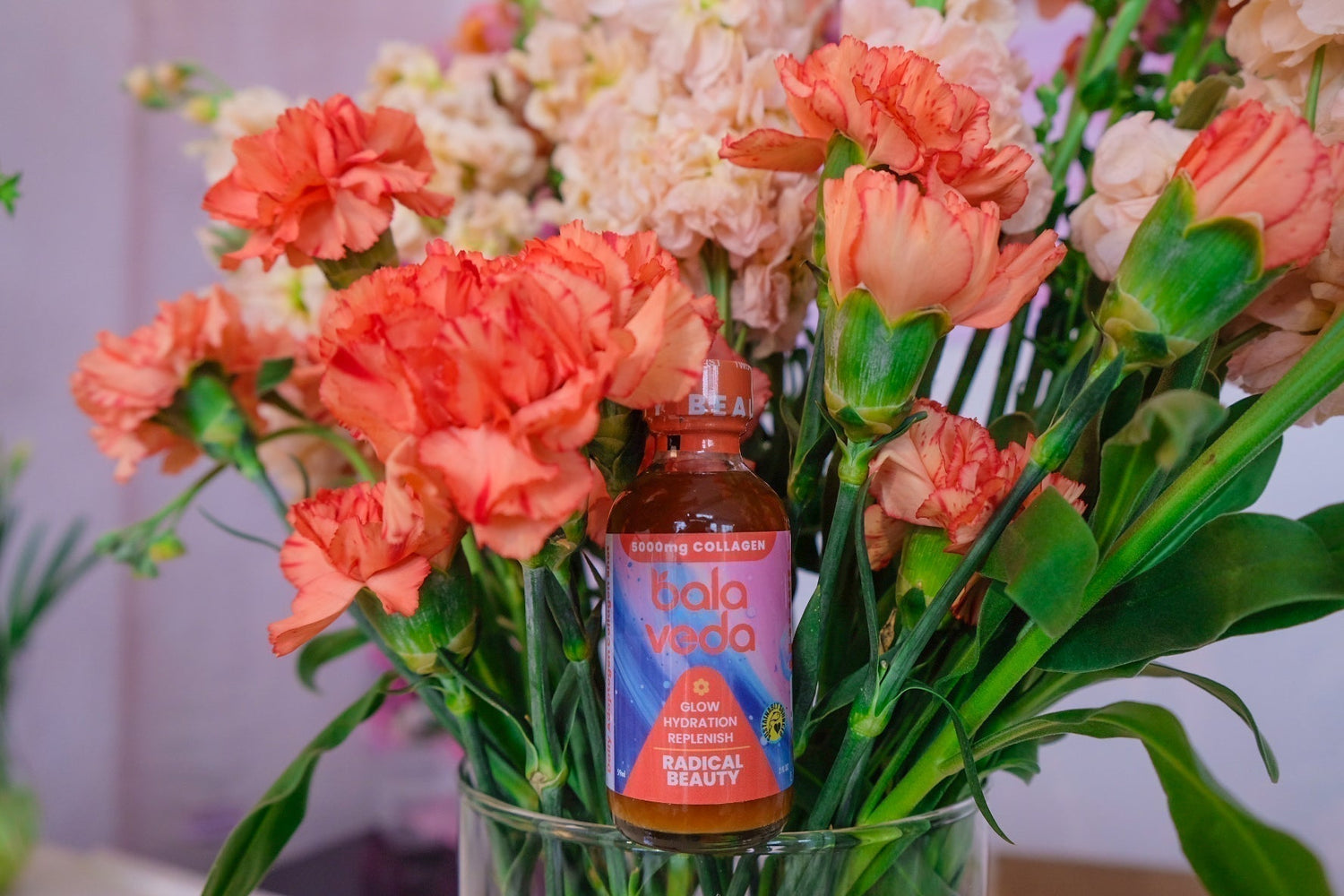
Oh! You know what checks all those boxes because it was formulated with them (and more) in mind? You guessed it, Radical Beauty! It tastes great and delivers 5000 mg of sustainably sourced marine collagen. So this month, treat yourself to to more than just self love, more than just another beauty product, try something that does both and so much more.
Adapt wisely,
balaveda