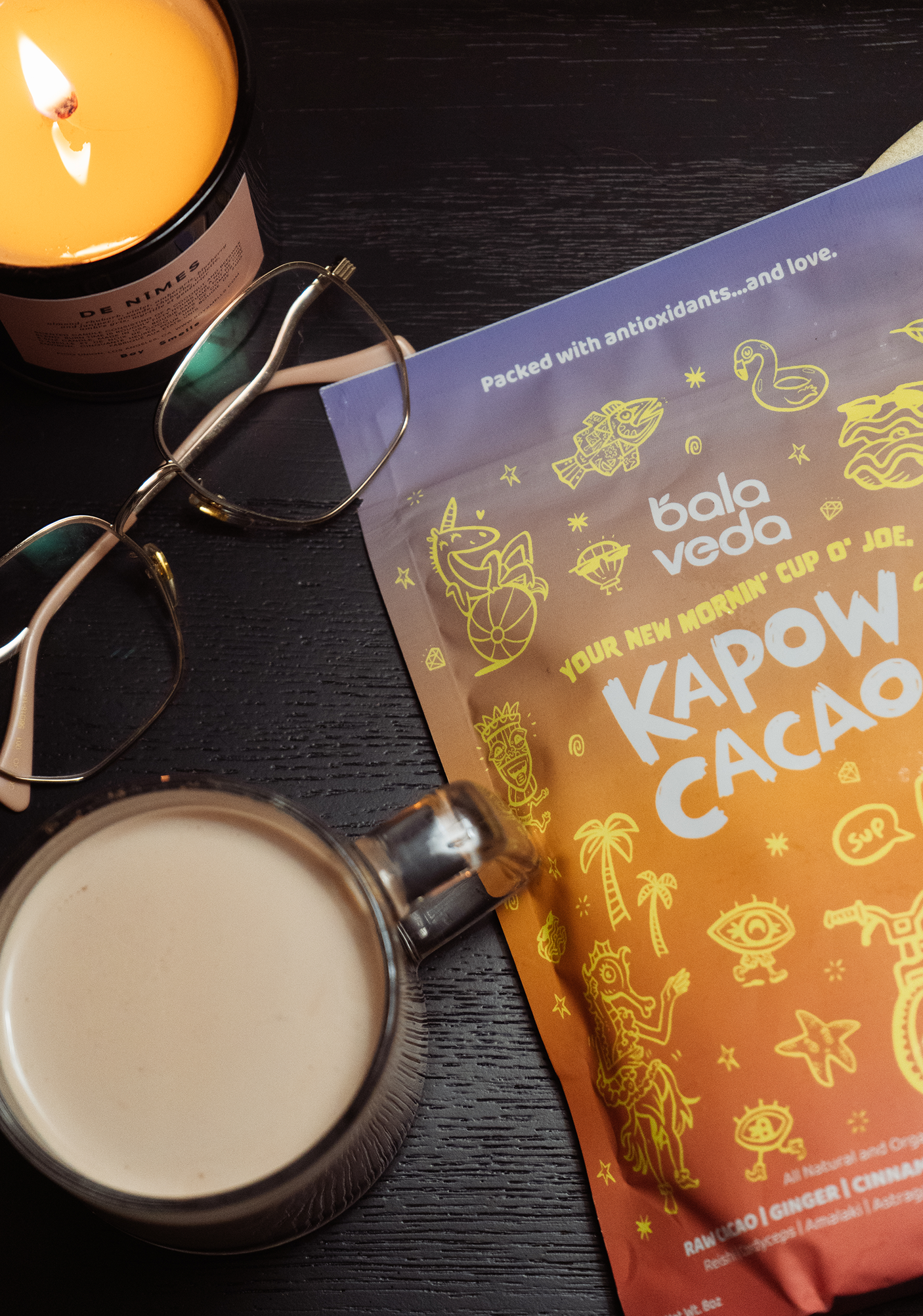
How adaptogens help heal the emotional body
February is when emotions have the audacity to be louder. The light is low, the calendars are packed, and even if you love Valentine’s Day, the societal pressure is… a lot.
When life gets loud, the nervous system gets chatty. Which is why I always say that adaptogens are the gateway to a better life. Partly because they have the effect of subtly making everything in our lives better but also because their ability to heal our inner landscape is widespread.
Adaptogens work on so many levels; from chemically to vibrationally and beyond. In doing so, they affect not only our biology, but our emotional body as well.
What Are Adaptogens?
Adaptogens are herbs and functional botanicals traditionally used to help the body adapt to stress. In modern terms, they’re best understood as stress-response support plants; not a magic wand, not a sedative, not rocket fuel. More like steady hands on the wheel when life gets loud.
And this is where it gets interesting. Because when the stress response shifts, the emotional experience often shifts with it. People don’t just tell me their bodies feel different, they tell me they feel different. Happier. More grounded. Lighter. More like themselves again.
A Few Adaptogens, and How People Commonly Describe Them
I’ve had plenty of clients give me emotional, not just physical feedback to adaptogens.
“Eleuthero and cordyceps make me feel happy”
“Reishi and ashwagandha make me feel deeply grounded”
“Tulsi makes me feel lighter”
Here are a few commonly used adaptogens and the kinds of experiences people often associate with them.
-
Reishi benefits are often described as supporting a more grounded, calm baseline, especially in evening rituals.
-
Ashwagandha benefits are commonly associated with relaxation and steadiness, particularly when stress has you feeling “on edge.”
-
Cordyceps benefits are often described as supporting endurance and vitality, a smoother kind of energy that pairs well with movement, long workdays, or that “I need to function like a person” feeling.
Adaptogens for Stress and Emotional Balance: An Ayurvedic Lens
Those comments made me realize that adaptogens are not just affecting our physical bodies but our mood, our emotions and overall wellbeing! They don’t just bring our body into balance, they bring our BEING into balance. When we are down, they bring us up, and the opposite is also true. They act as the great equalizers and this is not limited just to the physical body. So, let’s take a deeper look…
From an Ayurvedic perspective, adaptogens for stress aren’t just about “calm.” They’re about shifting our inner qualities back toward harmony. Emotional balance relies on a delicate balance of qualities, too.
In Ayurveda, the gunas, or qualities, shape our wellbeing and our illbeing. Too much of one quality or too little of another, and we’re out of balance.
Here are a few gunas as they correlate to emotion. Which would you rather feel?
Stable as opposed to mobile
Subtle as opposed to gross
Clear as opposed to slimy
Light as opposed to heavy
Soft as opposed to hard
Smooth as opposed to rough
The adaptogens themselves contain these gunas within them. For example, one of the qualities of Tulsi is that it is light. So naturally, it attunes us to that lightness. Remember, like attracts like and opposites heal, so even while feeling emotionally heavy we can turn to tulsi to lighten up the way we FEEL. We begin to adapt to the qualities of what we take in, whether we realize it or not.
Adaptogens and Stress: Supporting the Stress Response
Another way Adaptogens help us to heal our emotional body is that they calm the stress response, meaning they also calm the nervous system. Without all that cortisol running us on high alert, we can relax and feel those higher vibrational emotions like love, gratitude, equanimity and peace. They help us to free up SPACE in the body to FEEL.
Adaptogens are the ultimate permission slip to level up. When we talk about adaptogens and stress, what we’re really talking about is the stress response, the body’s built-in “alert system.” When stress is high, we can feel wired, reactive, depleted, or emotionally heavy.
Many adaptogens are designed to support the stress response by helping the body return toward balance. When you’re not running on high alert all day, you may feel more spacious internally, less braced, less brittle, more able to process emotions without feeling hijacked by them.
That’s one reason people describe adaptogens as supporting not only biology, but the emotional landscape too. They don’t force a mood, they support the conditions that make steadier moods more accessible.
What You Take In Becomes How You Feel
When thinking about how we want to feel, we should take into consideration what we feed our body, both on a physical level and a vibrational one. This goes for food, drink, and herbs, but also let’s be real, it ‘s also media, music, conversation etc., whatever we take in through the body or mind. Anything and everything that we must process or digest has an effect on our wellbeing.
So, do you accept the invitation?
In good health,
Amanda
I’ve created this small table to illustrate a few examples of the inner connectedness of adaptogens and feelings to get you started.