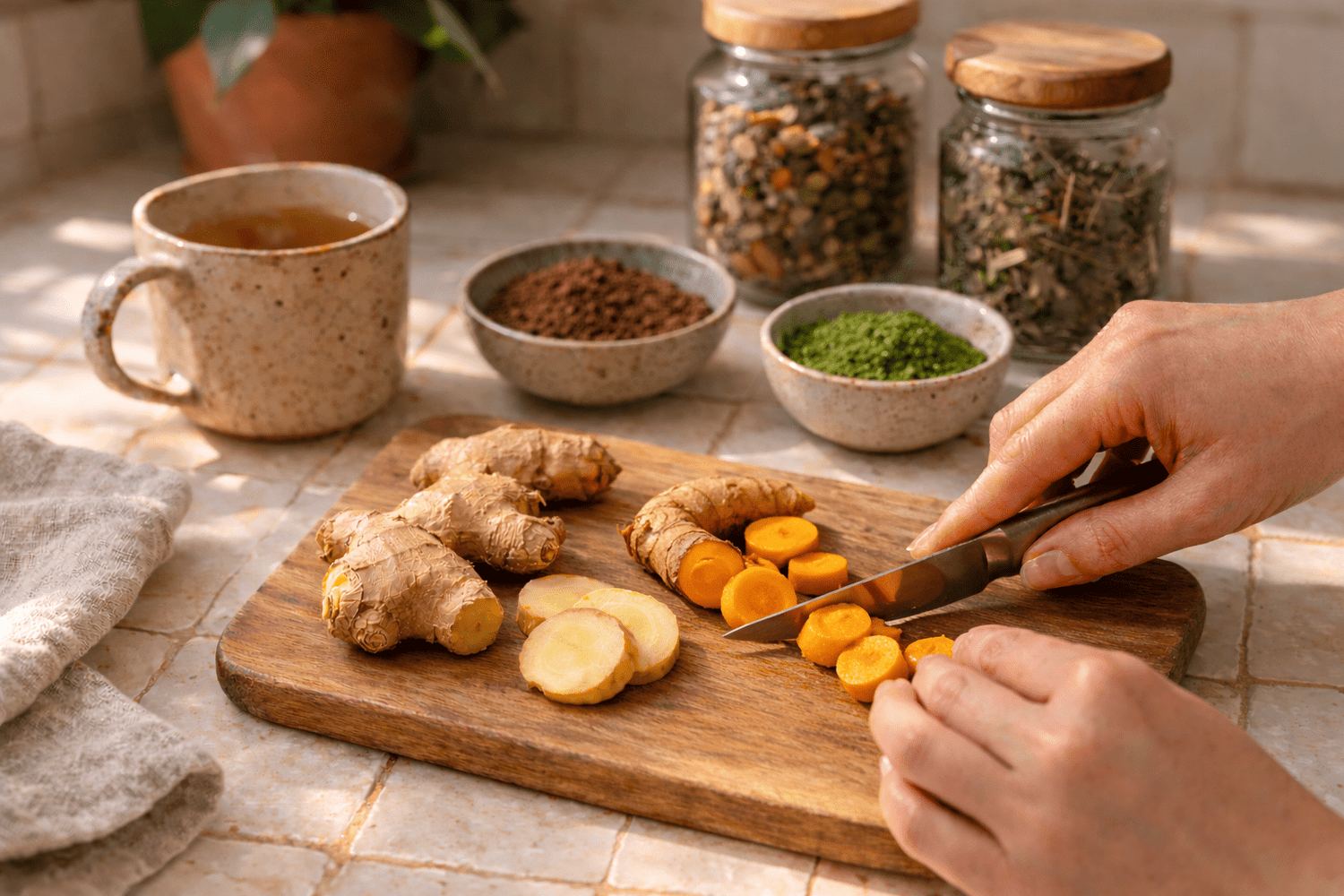
By definition, nutraceuticals are foods or food-derived substances that offer health benefits beyond basic nutrition, including supporting wellness and helping prevent and manage disease. When people ask what are nutraceuticals, they are usually referring to foods, herbs, or natural compounds that nourish the body while promoting long-term health.
Ayurveda has always understood this concept simply: food is medicine.
In Ayurveda, we don’t wait for the body to break down before we act. We live in the realm of prevention. The small choices we make today quietly shape how we feel tomorrow and how our health unfolds over time, whether that path leads toward disease or toward ease. Rather than waiting for the body to struggle, we support it daily so resilience and vitality aren’t a lucky accident, but the direction we’re walking in.
That’s why nutraceuticals matter. These longevity-focused foods are rooted in ancient wisdom and supported by modern science. They don’t simply meet your body’s basic needs; they leave you healthier, more resilient, and more vibrant than when they found you.
Nutraceuticals are superfoods in the truest sense. Once you understand their power, you begin to see food differently. You begin to see it as a daily ritual, an opportunity to nourish the body, calm the mind, and support long-term wellness.
Examples of Nutraceutical Foods
Cacao

Cacao is one of my favorite nutraceutical foods. When you can find a clean, consciously sourced cacao, a daily dose can be incredibly beneficial. The benefits of cacao include powerful antioxidants, magnesium, and compounds that support heart health and emotional well-being. Quality matters though, because some cacao products can contain heavy metals that can quietly disrupt the body over time. It has a unique ability to ground and uplift at the same time, nourishing the nervous system while opening the heart. When used intentionally, cacao becomes far more than a treat. It becomes a ritual for a long healthy life.
Matcha

Matcha is another powerful nutraceutical because it is a true whole food. You’re consuming the entire green tea leaf, finely ground, which means your body receives a concentrated dose of antioxidants that protect cells from damage. Matcha contains L-theanine, an amino acid that supports calm, focused energy and cognitive protection. This is why matcha provides clarity and steady energy without the crash that coffee can create. It sharpens the mind while soothing the nervous system, creating a sense of steady, balanced alertness.
Adaptogenic Mushrooms
 Adaptogenic mushrooms like cordyceps and reishi are ancient allies that work quietly and deeply. I often think of them as operating in the body the way a mycelium network supports a forest, communicating, regulating, and restoring balance at a foundational level. Cordyceps support clean energy and oxygen utilization, while reishi strengthens stress resilience and immune balance. Together, they help the body adapt more intelligently to the demands of life without forcing or overstimulating it.
Turmeric and Ginger

Turmeric and ginger are true gut-brain besties. In Ayurveda, we’ve always taught that all disease begins in the gut, and modern science is now confirming this, even linking neurological diseases back to gut health. A healthy gut truly is the foundation of a healthy life. Turmeric and ginger support digestion, reduce inflammation, and strengthen agni, the digestive fire that allows the body to properly process and assimilate nutrients. When digestion is strong, everything else functions more smoothly, from mood to immunity to mental clarity.
Mucuna Pruriens

Mucuna pruriens, often called the dopamine bean, is another remarkable nutraceutical. It is naturally rich in L-DOPA, the direct precursor to dopamine, the neurotransmitter responsible for motivation, pleasure, focus, and joy. When the body is depleted, this plant can gently support mood and nervous system health, helping restore balance without artificial stimulation. It works with the body’s natural chemistry, reminding it how to feel good again.
Bacopa and Gotu Kola

Bacopa and gotu kola are two adaptogenic greens with a special affinity for the brain. Brain health is essential. You can function without many things, but not without your mind. These herbs support memory, cognition, and long-term neurological health in a slow, steady, and deeply nourishing way. They don’t push the brain; they feed it.
Together, these foods represent the essence of nutraceutical philosophy: using nature’s ingredients to support the body deeply and consistently.
Nutraceuticals vs Supplements
Many people wonder about nutraceuticals vs supplements.
While the terms are sometimes used interchangeably, there is a difference. Nutraceuticals are foods or food-derived ingredients that naturally support wellness when incorporated into the diet. Supplements are typically concentrated vitamins or compounds taken in pill, capsule, or powder form.
Both can support health, but nutraceuticals emphasize using food itself as medicine.
Work With Your Body
Nutraceuticals remind us that wellness isn’t about quick fixes or chasing the next trend. It’s about daily devotion and choosing foods that work with your body rather than against it. This is ancient wisdom meeting modern life.
This is preventive nutrition as a lifestyle.
This is how we elevate the ritual, one nourishing choice at a time. 🌿
In good health,
Amanda